Who Is the Best Physical Therapist in Pasadena for Active Adults and Athletes? A Practical Guide
Connect with us on social media.
Written by
Noolee Kim, PT, DPT, OCS
Published on
May 21, 2026
Fitnes
Finding a physical therapist is not hard. Finding the right one is.
If you are an athlete, an active adult, or someone who genuinely cares about how your body performs, the standard PT experience often falls short. Most clinics are built to reduce pain and restore basic function. That is a reasonable goal. But if your baseline is training four days a week, playing competitive golf, or running half marathons, getting back to "normal" is not the finish line.
You need someone who understands performance. Someone who sees the difference between a body that is healed and a body that is ready. And in Pasadena, you have options worth evaluating carefully.
Here is what actually matters when you are choosing a physical therapist as an active adult or athlete.
1. Credentials and Training That Matter
Every licensed PT holds a Doctor of Physical Therapy degree. That is the floor, not the differentiator. What matters more is what they have done since graduating.
For athletes and active adults, look for post-graduate training in areas like:
- Sports physical therapy (SCS, Sports Certified Specialist)
- Orthopedic manual therapy
- Strength and conditioning (CSCS)
- Movement screening systems like FMS or SFMA
- Dry needling, blood flow restriction, or other performance-focused tools
These credentials show that a PT has invested in understanding how athletes actually move, train, and break down. It is not about collecting letters after a name. It is about depth of knowledge in the specific context of performance and sport.
When you are evaluating a clinic, ask about their background directly. A good PT will answer that question without hesitation.
2. Experience with Your Sport or Fitness Goals
A PT who works with athletes in general and a PT who understands the demands of your specific sport are not the same thing. The hip mechanics of a golfer mid-swing, the eccentric load on a runner's hamstring, the spinal compression patterns of a powerlifter, these are different problems. They require different knowledge.
Ask directly: have you worked with people who do what I do? How do you approach return-to-sport progressions for someone at my level? If they can speak specifically to your activity, its injury patterns, its movement demands, its performance markers, that is a good sign.
At i.Athlete Physio, the caseload spans golfers, runners, lifters, youth athletes, and active adults across a wide range of training goals. That breadth shapes how care gets structured from the first visit.
3. Personalized, One-on-One Evaluations
Clinic models vary more than most people realize. In a high-volume PT practice, a single therapist may be managing three or four patients simultaneously, rotating between them while assistants supervise exercises in between. That model works fine for straightforward cases. For complex injuries or performance goals, it tends to fall short.
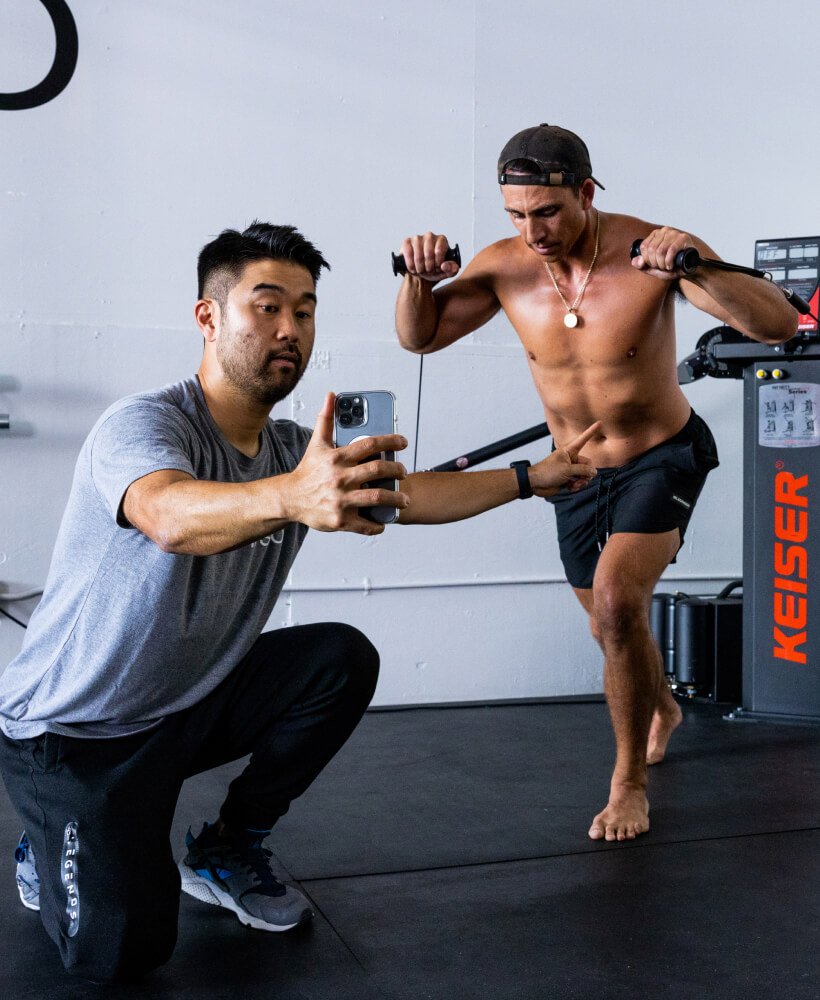
One-on-one care means your PT is actually watching you move, catching compensations in real time, and connecting what they see to what you are trying to accomplish. Small observations in a session can change the entire direction of a plan. That does not happen when attention is split.
Before you book, ask the clinic: will I see the same therapist every visit? How much of my session is hands-on versus independent exercise? Is my PT in the room with me the whole time?
The answers tell you a lot about what the actual experience will be, not just what the website says.
4. Advanced Assessment and Technology
A thorough initial evaluation is non-negotiable. Beyond reviewing your history and testing basic range of motion, the best providers use systematic tools to understand how your body moves as a whole, not just where it hurts.
Things worth asking about:
- Video movement analysis for running gait, squat mechanics, or sport-specific patterns
- Functional movement screening to surface compensations before they become injuries
- Strength testing and force output measurement
- Load and tissue capacity assessments for return-to-sport decisions
Technology does not make a great PT. But it does create an objective baseline, and it makes progress measurable. A clinic that can show you where you started and track how far you have come is running a tighter process than one that is going off feel alone.
5. Comprehensive Movement-Based Approach
Pain has a location. Injury has a cause. Those are not always the same place.
Traditional physical therapy often focuses on the structure that hurts… the knee, the shoulder, the lower back. A more complete approach looks at how the whole body loads and moves, because injuries rarely happen in isolation. The knee that keeps flaring up is often telling you something about hip strength, ankle mobility, or how load is being distributed through the chain.
For recurring or chronic injuries in particular, this distinction is everything. If you have had the same issue come back three times, the structure may have healed. The pattern that caused it probably has not.
i.Athlete's care model is built around exactly this progression: Injury, Recovery, Performance, Durability. The goal is not just to fix what hurts. It is to build a body that holds up to the things you are asking of it.
6. Proven Track Record and Client Success Stories
Credentials and methodology matter. Outcomes are what count.
When evaluating a PT in Pasadena, look for evidence that people like you have gotten the results you are after:
- Google and Yelp reviews that mention athletes, active adults, or specific sports
- Testimonials that describe concrete outcomes like returning to a marathon, getting back on the course, finally resolving a long-standing injury
- Word-of-mouth from coaches, trainers, or others in the local fitness community
A PT who is genuinely trusted by coaches and sports medicine professionals in the area has earned that over time. Reputation in a tight-knit athletic community is hard to fake and worth paying attention to.
7. Location and Accessibility
This one is practical and it matters more than people give it credit for. Consistency is everything in rehab and performance work. A PT who is excellent but inconvenient to get to is a PT you will eventually stop seeing.
Look at:
- Proximity to your home, gym, or training facility
- Schedule availability that actually fits your life (early morning, evening, weekends)
- How quickly you can get in for an initial evaluation -- delays cost recovery time
- The clinic environment itself
That last one is worth noting. A space designed around performance – open training areas, functional equipment, a gym-meets-clinical feel – often signals that the program is built the same way. Environment reflects philosophy.
Making Your Choice in Pasadena
Pasadena has solid PT options. The key is matching the right one to what you actually need. A few practical filters:
- Start with your goal, not your injury. Recovery, return to sport, and performance optimization are different problems that call for different approaches.
- Call before you book. A good clinic will take ten minutes to talk through your situation and explain how they work. If they rush you off the phone, notice that.
- Ask about the model. How many patients does the PT see at once? How long are sessions? Will you see the same person every visit?
- Read reviews with specificity. A handful of reviews that mention runners, golfers, or return-to-sport outcomes tell you more than fifty generic five-stars.
- Trust your read after the first visit. A quality PT makes you feel heard, gives you a clear picture of what they found, and explains a plan that actually makes sense.
The right fit matters as much as credentials. You are going to be in that room multiple times a week, working through something that requires trust and honest communication. That dynamic is worth being selective about.
Take the Next Step
If you are an active adult or athlete in Pasadena looking for physical therapy that is actually built around performance, i.Athlete Physio is worth a conversation.
Care is one-on-one, movement-based, and structured around your goals, whether you are recovering from injury, working to perform at a higher level, or building the durability to stay in the game long term. Every plan is built around how your body moves, not a template pulled from a shelf.
Explore our services for pain and injury recovery, performance physical therapy, and sport-specific programs, or reach out directly to talk through where you are and what you are working toward.
Share this post
Join 2,000+ subscribers
Stay in the loop with everything you need to know.8
We care about your data in our privacy policy
Other Resources